In Mangshi, a warm border city in Dehong, Yunnan, fabric does not always begin as something new.
Sometimes, it begins as a remnant.
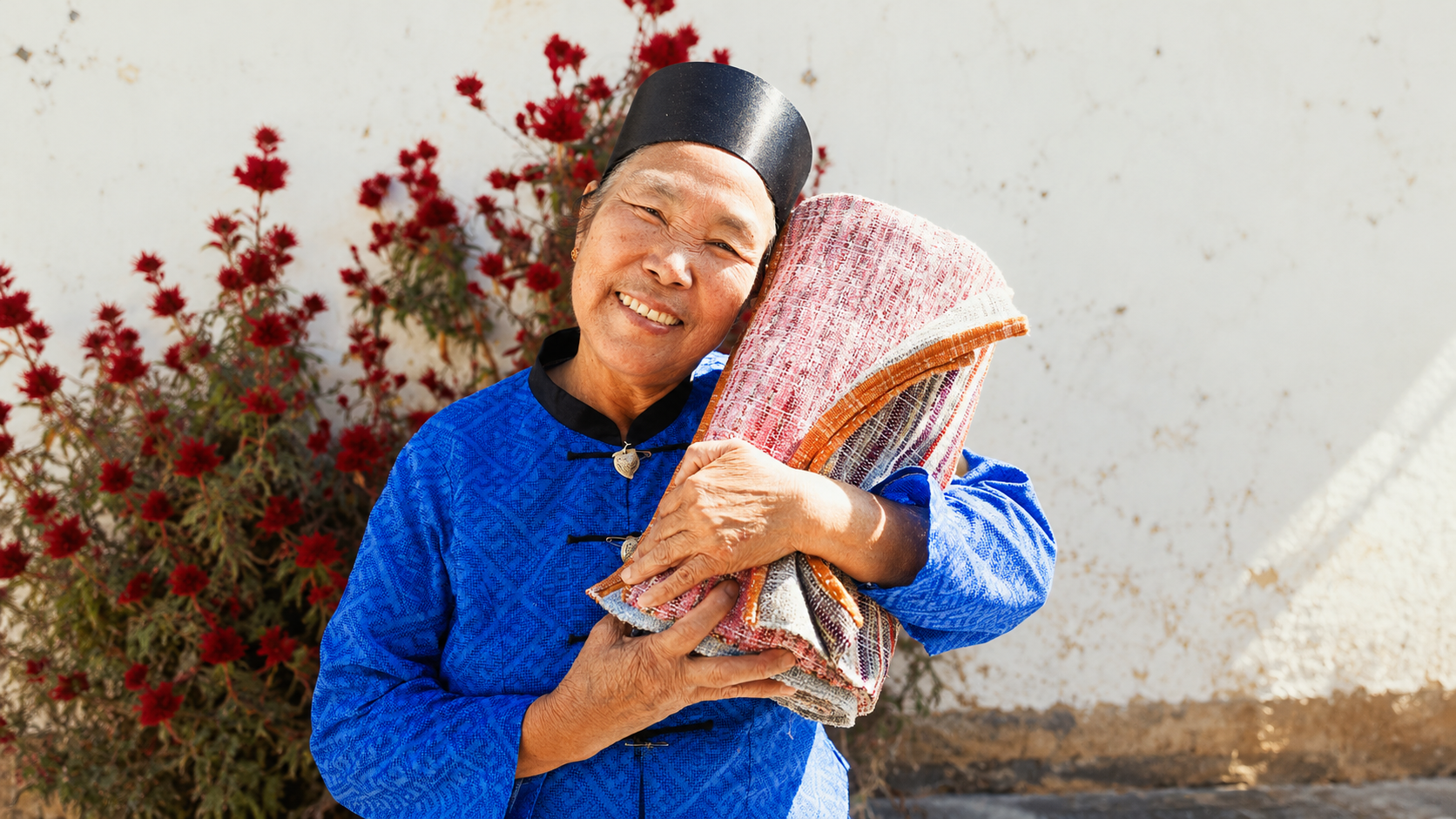
A shirt that has softened with years of wear. A length of cloth left from another household. A strip of color that once belonged to something else. In the hands of Auntie Yu Han, a Dai textile artisan from Mangshi, these fragments are not discarded. They are cut, gathered, folded into memory, and woven back into daily life.

A Textile That Begins Again
At Planet Fix Project, we work with Liezhi weave because it carries something we rarely find in modern production: irregularity that feels alive.
The surface is raised, tactile, and layered. The colors do not follow a perfect machine-made rhythm. Threads appear, disappear, overlap, and break. What some might call uneven, we see as evidence of the hand.
Auntie Yu Han understands this better than anyone.
Reading the Cloth
She does not approach cloth as a flat material. She reads it.
Before weaving begins, she studies the color, thickness, softness, and direction of each fabric strip. Some pieces are stronger and better suited for structure. Some are softer and create movement. Some carry color that should sit near the center of a bag, while others are better placed at the edge.
The final textile is never fully predictable, because the material itself has a voice.
This is the quiet beauty of Liezhi crack-weave fabric.
The Quiet Beauty of Liezhi Weave
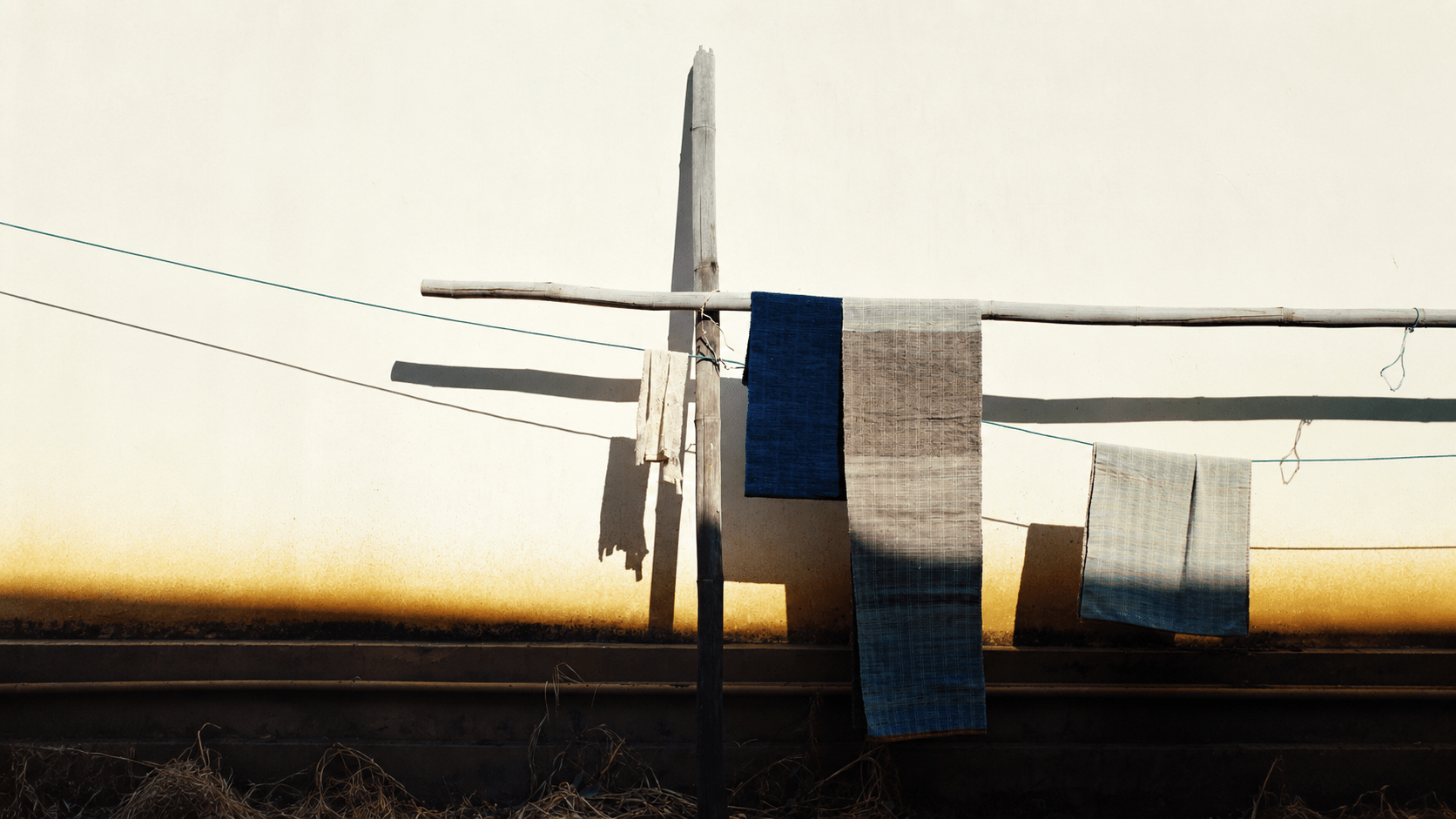
Unlike printed textiles, Liezhi weave is built through touch and repetition. Torn or cut fabric strips are woven into a new surface, creating natural lines, ridges, and subtle breaks across the cloth.
The result is not smooth or uniform. It has depth. It has weight. It has a rhythm that changes when the light moves across it.

For Auntie Yu Han, this process is not about making every piece identical. It is about allowing each piece of reclaimed cloth to find its place.
That is why no two Liezhi bags are exactly alike.
From Reclaimed Cloth to Everyday Bags
A square shoulder bag may carry vertical bands of blue, cream, and red. A mini bucket bag may hold warmer tones of ochre and rust. A phone crossbody pouch may become a small field of stripes, light enough to move with the body.

Each form begins with the same question: what does this textile want to become?
The answer is never forced.
In Auntie Yu Han’s hands, Liezhi weave becomes more than fabric. It becomes a way of preserving material memory. Cloth that might have been forgotten is given structure again. Color that might have disappeared is allowed to remain visible.
Small irregularities — fiber ends, uneven texture, broken lines, subtle shifts in density — become part of the final object.
They are not flaws.
They are the reason the object feels human.
Why No Two Pieces Are Alike
This is also why our Liezhi bags are made slowly. Each piece must be selected, cut, shaped, sewn, reinforced, and finished individually.

The artisan considers how the fabric bends, how the strap sits, how the surface will appear when worn close to the body. A bag is not only something to hold belongings. It is something that moves with a person.
Auntie Yu Han’s work reminds us that craft is not only about skill. It is also about patience, memory, and respect for material.
In a world where many objects are designed to look the same, her Liezhi weave carries the opposite spirit. It keeps the marks of reuse. It keeps the softness of cloth. It keeps the quiet presence of the hand.
A Continuing Life of Cloth
Through our collaboration, Planet Fix Project hopes to bring this Yunnan textile craft into new daily forms — shoulder bags, phone pouches, bucket bags, and other one-of-a-kind pieces made for slow movement and everyday carrying.
Each Liezhi bag is photographed individually. The piece shown is the piece that will be received.
Because in Auntie Yu Han’s work, there is no exact repeat.
Only one piece of cloth, one rhythm of color, one pair of hands, and one object made to continue its life.

About Liezhi Weave
Liezhi weave is a crack-weave textile technique that transforms reclaimed fabric strips into a new woven surface. Known for its irregular texture, raised lines, and layered color, Liezhi fabric carries the memory of reused cloth while creating something tactile and contemporary.
At Planet Fix Project, we use Liezhi weave in one-of-a-kind textile bags and handmade objects that celebrate slow craft, ecological materials, and artisan memory.